முழுமையான மாதிரி அறிக்கை
இந்த அறிக்கை ஒரு உண்மையான தேர்வரின் கணினி வழி Task 1 பயிற்சித் தேர்விலிருந்து எடுக்கப்பட்டது. எழுதிய நேரம், இடைநிறுத்தங்கள், திருத்த எண்ணிக்கைகள், பக்கத்தை விட்டு விலகிய நேரம் ஆகியவை தேர்வரின் அசல் பதிவு. அவர்களின் தனியுரிமையைக் காக்க, கட்டுரை அசலிலிருந்து அதே நிலையிலும் அதே வகைப் பிழைகளுடனும் மீண்டும் எழுதப்பட்டுள்ளது. மதிப்பெண்கள், கருத்துரை, செயல்முறை பகுப்பாய்வு, மாதிரி விடை ஆகிய அனைத்தும் இந்தக் கட்டுரைக்காக எங்கள் அமைப்பால் உருவாக்கப்பட்டவை; உங்கள் சொந்தக் கட்டுரையை எழுதியபின் நீங்கள் காண்பதும் இதுவே.
முயன்று பாருங்கள்: காலவரிசையில் ஒரு புள்ளியை, சான்று அட்டையில் உள்ள “மறுஇயக்கு” இணைப்பை கிளிக் செய்யுங்கள்; அல்லது கீழே உள்ள எழுதும் மறுஇயக்கத்தை நேரடியாக ஓட்டுங்கள்.
5.5
ஒட்டுமொத்த Band மதிப்பெண்
Band 6-க்கு 0.5 தூரம்
நீங்கள் நன்றாகச் செய்தவை
- ஆரம்பத்திலேயே அடையாளம் காணக்கூடிய மேலோட்டப் பார்வை தரப்பட்டுள்ளது ('Overall, the process has seven steps...'); வெறும் நிகழ்வுகளைச் சொல்லும் 5-இலிருந்து 6-ஐ வேறுபடுத்துவது இதுவே.
- நிலைகளின் வரிசை தெளிவாகக் குறிக்கப்பட்டுள்ளது; வாசகர் குழப்பமின்றி செயல்முறையைத் தொடர முடிகிறது.
- வரைபடத்திலிருந்து தலைப்புக்குரிய குறிப்புகள் — 'rain-shadow desert', 'windward side', 'leeward side', 'inland' — சரியாகப் பயன்படுத்தப்பட்டுள்ளன.
Band 6-ஐ அடைவதற்கான படிகள்
- 1சரியான வடிவங்களைப் பயன்படுத்துங்கள்: 'blown' ('blowed' அல்ல), 'carrying' ('carring' அல்ல), 'the air keeps rising' ('is keep rising' அல்ல).
- 2எழுவாய்-பயனிலை இசைவைத் திருத்துங்கள்: 'clouds goes' → 'clouds go'; 'the high mountains blocks' → 'the mountains block'; 'the wind ... have arrived' → 'has arrived'.
- 3மழை பெய்யும் இடத்தைத் திருத்துங்கள்: காற்று மலையைக் கடப்பதற்கு முன், உச்சிக்கு அருகிலுள்ள காற்றெதிர்ப் பக்கச் சரிவில் மழை பெய்கிறது; மேகங்கள் 'go over the top' ஆன பிறகு அல்ல.
என் Essay163 சொற்கள் · 9 வாக்கியங்கள்
கேள்வி
The diagram below shows how one type of desert, known as a rain-shadow desert, is formed. Summarise the information by selecting and reporting the main features, and make comparisons where relevant. Write at least 150 words.
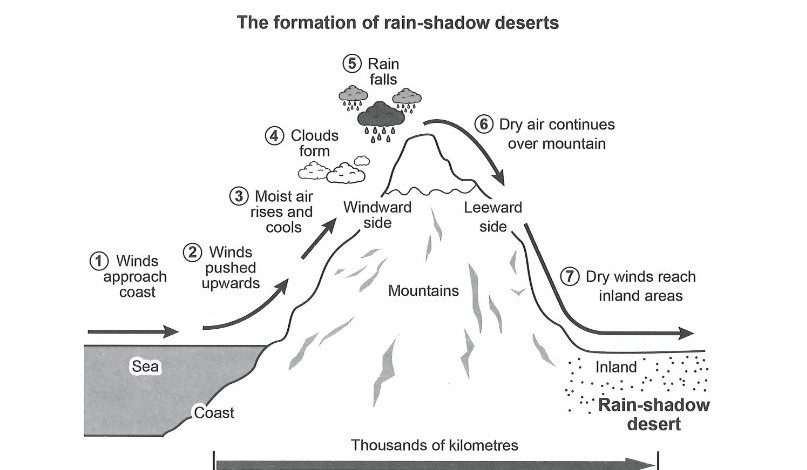
சொல்வளம் குறைவானது; பெரும்பாலும் வரைபடத்திலுள்ள குறிப்புகளிலிருந்து எடுக்கப்பட்டது (windward side, leeward side, rain-shadow desert, inland); மாற்றுச் சொற்கள் மிகக் குறைவு. 'blowed' இரண்டு முறை, 'carring' போன்ற கண்ணில் படும் சொல்லுருவாக்க, எழுத்துப்பிழைகள் உள்ளன; 'wind', 'moist air', 'inland area' ஆகிய சொற்கள் மீண்டும் மீண்டும் வருகின்றன. வீச்சு பணிக்குக் குறைந்தபட்சமாகப் போதுமானது; பிழைகள் புரிதலை அரிதாகவே தடுக்கின்றன.
ஏன் Band 6 அல்ல
Band 6-க்கு, அரிதான சொற்களைச் சில தவறுகளுடன் மட்டுமே பயன்படுத்தும் முயற்சியுடன் கூடிய போதிய சொல்வள வீச்சு தேவை. இங்கு வீச்சு குறுகியது; 'blowed', 'carring' போன்ற பிழைகள் எப்போதாவது அல்ல, மீண்டும் மீண்டும் வருகின்றன; இது கண்ணில் படும் சொல்லுருவாக்கப் பிழைகளுடன் குறைந்த வீச்சு என்ற Band 5 விளக்கத்துக்குப் பொருந்துகிறது.
பலங்கள்
- வரைபடத்திலிருந்து தலைப்புக்குரிய குறிப்புகள் — 'rain-shadow desert', 'windward side', 'leeward side', 'inland' — சரியாகப் பயன்படுத்தப்பட்டுள்ளன.
- சில பயனுள்ள செயல்முறைச் சொற்கள் காணப்படுகின்றன: 'moist air', 'becomes cold', 'clouds', 'slope', 'dry air'.
- பிழைகள் இருந்தாலும் கருத்து முழுவதும் தெளிவாக உள்ளது; எனவே தகவல்தொடர்பு கடுமையாகப் பாதிக்கப்படவில்லை.
மேம்படுத்த வேண்டியவை
- சரியான வடிவங்களைப் பயன்படுத்துங்கள்: 'blown' ('blowed' அல்ல), 'carrying' ('carring' அல்ல), 'the air keeps rising' ('is keep rising' அல்ல).
- 'wind', 'moist air', 'inland area' ஆகியவற்றை மீண்டும் சொல்வதற்குப் பதிலாக மாற்றுச் சொற்களைப் பயன்படுத்துங்கள் — எ.கா. 'air mass', 'the moisture-laden air', 'the interior'.
- செயல்முறைகளை விவரிக்கப் பொருத்தமான சொல்லிணைவுகளைச் சேருங்கள்: 'the air is forced upwards', 'condenses to form clouds', 'releases its moisture as rain', 'descends the leeward slope'.
மேலும் விவரங்கள்
சொல்வளத்தின் வீச்சு: கிட்டத்தட்ட அனைத்து உள்ளடக்கச் சொற்களும் வரைபடத்திலிருந்து அல்லது பொதுவான செயல்முறை மொழியிலிருந்து வருகின்றன: 'ocean', 'windward side', 'moist air', 'clouds', 'leeward side', 'inland area'. 'condense', 'precipitation', 'descend', 'moisture-laden' போன்ற சுயமான சொல்வளத்துக்குச் சான்று குறைவு.
சொல்லுருவாக்கமும் எழுத்துப்பிழையும்: 'the wind blowed from the ocean', 'is blowed towards the windward side' ஆகியவை தவறான past participle-ஐப் பயன்படுத்துகின்றன; 'By carring very little water down the slope' என்பதில் 'carrying' தவறாக எழுதப்பட்டுள்ளது. இவை Band 5-இல் விவரிக்கப்படும் வகையான கண்ணில் படும் பிழைகள்; இருந்தாலும் வாசகரால் பின்தொடர முடிகிறது.
சொல்லிணைவு: 'starts dropping heavy rain', 'clouds are appeared' போன்ற தொடர்கள் பொருந்தாதவை: மழை பெய்யும் அல்லது வெளியிடப்படும்; மேகங்கள் உருவாகும் அல்லது தோன்றும். 'the moist air goes up and becomes cold' ஏற்கத்தக்கது, ஆனால் 'rises, cools and condenses' என்று கூர்மையாக்கலாம்.
மீள்வு: 'wind' ஐந்து முறையும், 'moist air' மூன்று முறையும், 'inland area' இரண்டு முறையும் வருகின்றன; தொடர்ச்சியைக் குறிக்கும் வினையாக 'keep' மூன்று முறை பயன்படுத்தப்பட்டுள்ளது. இந்த மீள்வு சொல்வளம் குறைவு என்பதைக் காட்டுகிறது.
முழுமையான மதிப்பீடு
பலங்களின் அடையாளம்:
கட்டுரை செயல்முறை விவரிப்பின் அடிப்படைப் பணியைச் செய்கிறது: வரைபடத்தைத் தெளிவாக அறிமுகப்படுத்துகிறது, மேலோட்டப் பார்வையைக் கூறுகிறது, கடலிலிருந்து உள்நாட்டுப் பாலைவனம் வரை நிலைகளைச் சரியான வரிசையில் நடத்திச் செல்கிறது. வரைபடத்திலிருந்து தலைப்புச் சொற்கள் (windward side, leeward side, rain-shadow desert, inland) சரியாகப் பயன்படுத்தப்பட்டுள்ளன; பத்திப் பிரிப்பு செயல்முறையின் தர்க்கத்தைப் பின்பற்றுகிறது; வாசகர் முழு வரிசையையும் சிரமமின்றிப் பின்தொடர முடிகிறது.
உத்தி ஆலோசனை:
- குறுகிய காலத்தில்: துல்லியமான செயல்முறைச் சொல்லிணைவுகளின் சிறு தொகுப்பைக் கற்றுக்கொள்ளுங்கள் (the air is forced upwards, the air cools and condenses, clouds form, rain falls on the windward slope, the air descends and warms, the interior stays dry); தற்செயலாக உருவாக்கும் தொடர்களுக்குப் பதிலாக அவற்றைப் பயன்படுத்துங்கள்.
- நடுத்தர காலத்தில்: ஒவ்வொரு பயிற்சிப் பணிக்குப் பிறகும் உங்கள் சொந்த வாக்கியங்களை மீண்டும் எழுதி, வினை வடிவங்களில் துல்லியத்தை வளர்த்துக்கொள்ளுங்கள் — past participle-கள் (blow–blew–blown), மூன்றாம் நபர் ஒருமை -s, செயப்பாட்டு வினை எப்போது சாத்தியம், எப்போது இல்லை என்பது.
- நீண்ட காலத்தில்: நிலைகளை ஒவ்வொன்றாகச் சொல்வதற்குப் பதிலாக, காரண-விளைவை உங்கள் சொந்த சொற்களில் விளக்கும் செயல்முறை விவரிப்புகளை எழுதிப் பயிலுங்கள்; அப்போது மேலோட்டப் பார்வையும் காரணத் தொடரும் விவரிப்பைத் தாங்கும்.
செயல்படுத்தக்கூடிய படிகள்:
- இந்தக் கட்டுரையை மழை உச்சிக்கு அருகிலுள்ள காற்றெதிர்ப் பக்கச் சரிவில் பெய்யும்படி மீண்டும் எழுதுங்கள்; உள்நாட்டில் காற்று வறண்டிருப்பது அது ஈரப்பதத்தை இழந்ததால் என விளக்கும் ஒரு வாக்கியத்தைச் சேருங்கள்.
- உங்கள் கட்டுரையிலிருந்து பத்து வாக்கியங்களை எடுத்துத் திருத்துங்கள்; பிறகு எழுவாய்-பயனிலை இசைவிலும் past participle-களிலும் மட்டும் கவனம் செலுத்தி ஒரு தூய்மையான பதிப்பை உருவாக்குங்கள்.
- மேலும் மூன்று செயல்முறை-வரைபடப் பணிகளைச் செய்யுங்கள் (எ.கா. the water cycle, the formation of a waterfall); ஒவ்வொன்றிலும் நிலைகளை விவரிப்பதற்கு முன் இரண்டு வாக்கிய மேலோட்டப் பார்வையை எழுதுங்கள்.
- 15 செயல்முறை வினைகளும் சொல்லிணைவுகளும் அடங்கிய சொல்தாளை உருவாக்குங்கள் (condense, evaporate, release moisture, descend, accumulate); அடுத்த Task 1-இல் அவற்றில் குறைந்தது எட்டைப் பயன்படுத்துங்கள்.
மதிப்பெண் உயர்வு வழி:
ஒட்டுமொத்தமாக Band 6-ஐ அடைய, பணி நிறைவும் ஒருங்கிணைவும் 6-இல் நிலைக்க வேண்டும்; சொல்வளமும் இலக்கணமும் 5-இலிருந்து 6-க்கு உயர வேண்டும். நடைமுறையில் இதன் பொருள் அதிகமாக அல்ல, குறைவான பிழைகளுடன் எழுதுவது: 'blowed', 'clouds are appeared', 'mountains blocks' போன்ற மீண்டும் வரும் தவறுகளை நீக்குங்கள்; சற்று பரந்த செயல்முறை வினைகளையும் இணைப்புச் சொற்களையும் பயன்படுத்துங்கள்; காரண விளக்கம் உண்மையில் சரியானது என்பதை உறுதிசெய்யுங்கள். விவரிப்பு துல்லியமாகவும் வாக்கியங்கள் பெருமளவில் பிழையற்றவையாகவும் இருந்தால், இதே அமைப்பு 6.5 பெறும்.
இந்தக் கட்டுரையை நீங்கள் எப்படி எழுதினீர்கள்
தேர்வு சிமுலேட்டரில் நீங்கள் தட்டச்சு செய்த விதத்தின் அடிப்படையில்: எப்போது தொடங்கினீர்கள், எங்கே நிறுத்தினீர்கள், எதை மீண்டும் எழுதினீர்கள், நேரத்தை எப்படிப் பயன்படுத்தினீர்கள்.
ஆசிரியரின் சுருக்கம்
உங்கள் முக்கிய இழப்பு இறுதிச் சரிபார்ப்பு இல்லாததாலும் பலவீனமான திட்டமிடலாலும் வந்தது: இறுதிவரை தட்டச்சு செய்தீர்கள்; தேர்வாளர் குறித்த வினைப் பிழைகளை மீண்டும் செய்தீர்கள்.
இதை உங்கள் அடுத்த கட்டுரையில் பயிற்சி செய்யுங்கள்: ஒவ்வொரு வாக்கியத்திலும் ஒரு சரியான வினை வடிவத்தை எழுதி, பிறகு ஒரு முறை சரிபார்க்கப் பயிலுங்கள்.
நீங்கள் நன்றாகச் செய்தவை
நேர வரம்புக்குள் 163 சொற்களை அடைந்தீர்கள்; வரைபடத்தின் நிலைகளை வரிசையாகப் பின்பற்றினீர்கள்.
எழுதும் காலவரிசை
- மொத்த நேரம்
- 19:26
- திட்டமிடல்
- 0:05
- சரிபார்த்தல்
- 0:00
- பக்கத்தை விட்டு விலகியிருந்தது
- 1:12
- ஒட்டப்பட்டது
- 0%
உங்கள் மதிப்பெண்ணைப் பாதித்த 4 பழக்கங்கள்
- Grammatical Range and Accuracy
இலக்கணத்துக்கு இறுதிச் சரிபார்ப்பு இல்லை
- என்ன நடந்தது
- சமர்ப்பிக்கும் முன் 0:00 வரை தட்டச்சு செய்தீர்கள்; கட்டுரையின் 39% கடைசி 5 நிமிடங்களில் வந்தது. இருந்தும் தேர்வாளர் "blowed", "clouds are appeared" உட்பட 10 பிழைகளைக் குறித்தார்.
- ஏன் மதிப்பெண் குறைகிறது
- சிறு வினை, எழுத்துப் பிழைகள் உரையில் தங்கிவிட்டன; இது GRA, LR-க்கான 5-உடன் பொருந்துகிறது.
அடுத்த முறை: 17-ஆவது நிமிடத்தில் எழுதுவதை நிறுத்தி, ஒவ்வொரு வினை முடிவையும் எழுத்துப்பிழையையும் சரிபார்க்க 3 நிமிடம் செலவிடுங்கள்.
சான்று
- Task Achievement
தட்டச்சுக்கு முன் மேலோட்டப் பார்வையைத் திட்டமிடுங்கள்
- என்ன நடந்தது
- 0:05-இல் தொடங்கினீர்கள்; பிறகு மேலோட்டப் பார்வைக்குள் 30-38 வினாடி இடைநிறுத்தங்கள் மூன்றைச் செய்தீர்கள். அந்த வாக்கியத்தை 14 முறை திருத்தவும் செய்தீர்கள்.
- ஏன் மதிப்பெண் குறைகிறது
- மேலோட்டப் பார்வை தெளிவற்றதாகவே இருந்தது: "which means the desert is mainly caused by the wind". இது TA, CC இரண்டையும் (இரண்டும் 6) பலவீனப்படுத்தியிருக்கலாம்.
அடுத்த முறை: தட்டச்சுக்கு முன், ஏழு நிலைகளுக்கும் எண்ணிட 3 நிமிடம் செலவிட்டு, காற்று, மலைகள், மழை பற்றிய ஒரே வாக்கியத்தில் மேலோட்டப் பார்வையை எழுதுங்கள்.
சான்று
- Grammatical Range and Accuracy
ஒவ்வொரு வாக்கியத்திலும் ஒரு வினையைத் திருத்துங்கள்
- என்ன நடந்தது
- "Then, clouds goes over the top and starts dropping heavy rain." என்பதில் 42 வினாடி நின்றீர்கள்; இந்த வாக்கியத்தை 9 முறை திருத்தினீர்கள். "clouds are appeared" என்பதை 12 முறையும் "By carring..." என்பதை 8 முறையும் திருத்தினீர்கள்; இருந்தும் பிழைகள் நீடித்தன.
- ஏன் மதிப்பெண் குறைகிறது
- தேர்வாளர் இதே வடிவங்களைக் குறித்தார்; எனவே இந்த மீண்டும் மீண்டும் செய்த திருத்தம் GRA, LR-ஐப் பாதுகாக்கவில்லை.
அடுத்த முறை: ஒவ்வொரு வாக்கியத்துக்குப் பிறகும் ஒரு முறை மீண்டும் படித்து வினையைத் திருத்துங்கள்: "clouds form", "the air keeps rising", "the desert is formed".
சான்று
- Coherence and Cohesion
இறுதிப் பத்திக்கு நேரம் விடுங்கள்
- என்ன நடந்தது
- கடைசி 5 நிமிடங்களில் 63 சொற்கள் இருந்தன; இறுதிப் பத்தி 4:58 எடுத்தது. 1:12 நேரம் பக்கத்திலிருந்து விலகியிருந்தீர்கள். முடிவில் இன்னும் "After raining on the top, but..." இருந்தது.
- ஏன் மதிப்பெண் குறைகிறது
- உடைந்த இணைப்பும் தெளிவற்ற காரணமும் கொண்ட அவசர முடிவு CC, TA-ஐக் குறைக்கலாம்.
அடுத்த முறை: 15-ஆவது நிமிடத்துக்குள் இறுதிப் பத்தியைத் தொடங்கி, தெளிவான ஒரு காரண வாக்கியத்தை எழுதுங்கள்: "The mountains take the rain, so the inland area stays dry."
சான்று
நீங்கள் மிக நீண்ட நேரம் நிறுத்திய இடங்கள்
- 42 விவாக்கியத்தின் நடுவில் · 12:51Then, clouds goes over the top and starts dropping heavy rain.
- 38 விவாக்கியத்தின் நடுவில் · 2:34Overall, the process has seven steps in which the wind blowed from the ocean travels a long way to the inland area, which means the desert is mainly caused by the wind.
- 30 விவாக்கியத்தின் நடுவில் · 1:42Overall, the process has seven steps in which the wind blowed from the ocean travels a long way to the inland area, which means the desert is mainly caused by the wind.
- 30 விவாக்கியத்தின் நடுவில் · 7:19Overall, the process has seven steps in which the wind blowed from the ocean travels a long way to the inland area, which means the desert is mainly caused by the wind.
- 23 விவாக்கியத்தின் நடுவில் · 0:20The diagram illustrates how a special kind of desert, called a rain-shadow desert, is formed.
நீங்கள் தயங்கிய சொற்கள்
நீங்கள் அழித்து மீண்டும் தட்டச்சு செய்த அல்லது நடுவில் நிறுத்திய சொற்கள். சிவப்பு நிறத்தில் உள்ளவை இன்னும் பிழையாகக் குறிக்கப்பட்டன.
நீங்கள் மீண்டும் எழுதிய வாக்கியங்கள்
- 14 முறை திருத்தப்பட்டதுOverall, the process has seven steps in which the wind blowed from the ocean travels a long way to the inland area, which means the desert is mainly caused by the wind.
- 12 முறை திருத்தப்பட்டதுWhen the moist air is cold enough, clouds are appeared.
- 9 முறை திருத்தப்பட்டதுThen, clouds goes over the top and starts dropping heavy rain.
- 8 முறை திருத்தப்பட்டதுBy carring very little water down the slope, the wind which is mostly dry air have arrived at the inland area.
- 7 முறை திருத்தப்பட்டதுAfter raining on the top, but the air still keeps moving down along the leeward side.
எழுதுதல் மறுஓட்டம்
19:26 / 19:26 · 163 சொற்கள்Band 6.5 நிலையில் உங்கள் கட்டுரை
அதே கருத்துகளும் அமைப்பும், ஒரு Band உயர்வாக மீண்டும் எழுதப்பட்டுள்ளது; அடுத்த நிலை சரியாக எப்படி இருக்கும் என்பதைப் பார்க்கலாம்.
புதிய அல்லது மாற்றிய சொற்றொடர்
உங்கள் கட்டுரை
The diagram illustrates how a special kind of desert, called a rain-shadow desert, is formed.
Overall, the process has seven steps in which the wind blowed from the ocean travels a long way to the inland area, which means the desert is mainly caused by the wind.
At first, the wind from the ocean is blowed towards the windward side of the mountain. The air is keep rising and pushed higher, and then the moist air goes up and becomes cold. When the moist air is cold enough, clouds are appeared. Then, clouds goes over the top and starts dropping heavy rain.
After raining on the top, but the air still keeps moving down along the leeward side. By carring very little water down the slope, the wind which is mostly dry air have arrived at the inland area. That is how the rain-shadow desert keep forming and why almost no rain comes to the inland since the high mountains blocks the clouds.
Band 6.5 வடிவம்
The diagram illustrates how a special kind of desert, called a rain-shadow desert, is formed.
Overall, the process has seven steps, in which the wind from the ocean travels thousands of kilometres from the sea and coast to the inland area, so the desert is mainly caused by the wind.
At first, the wind from the ocean blows towards the windward side of the mountain. The air is forced upwards and keeps rising, and the moisture-laden air becomes cold as it goes up. When it is cold enough, clouds form. At this point, rain falls near the summit on the windward slope.
Subsequently, the air continues over the mountain top and descends the leeward side. Carrying very little water down the slope, the dry winds arrive at the inland area. Finally, the rain-shadow desert forms there. That is why almost no rain comes to the interior: the air has already released its moisture on the windward side, rather than being blocked by the mountains.
என்ன மாறியது
- Task Achievement
மழை பெய்யும் இடத்தைத் திருத்தினேன்; 'Then, clouds goes over the top and starts dropping heavy rain' என்பதை 'At this point, rain falls near the summit on the windward slope' என மாற்றினேன்; இப்போது காற்று மலையைக் கடப்பதற்கு முன்பே மழை பெய்வது தெளிவாகத் தெரிகிறது.
- Task Achievement
'why almost no rain comes to the inland since the high mountains blocks the clouds' என்பதிலுள்ள வறட்சியின் தவறான காரணத்தை 'the air has already released its moisture on the windward side, rather than being blocked by the mountains' என மாற்றினேன். வரைபடத்தின் அளவையும் குறிப்புகளையும் சேர்த்தேன்: 'thousands of kilometres from the sea and coast to the inland area', 'descends the leeward side'.
- Coherence and Cohesion
மேலோட்டப் பார்வைக்கு அறிமுகத்துக்குப் பிறகு தனிப் பத்தி அளித்தேன்; 'After raining on the top, but the air still keeps moving down along the leeward side' என்பதிலுள்ள குறைபாடுள்ள இணைப்பை 'Subsequently, the air continues over the mountain top and descends the leeward side' என மாற்றினேன்; இணைப்புச் சொற்களின் வீச்சை விரிவுபடுத்த 'At first', 'Finally' ஆகியவற்றைச் சேர்த்தேன்.
- Grammatical Range and Accuracy
வினை வடிவங்களையும் இசைவையும் திருத்தினேன்: 'the wind blowed' என்பது 'the wind ... blows' ஆனது, 'clouds are appeared' என்பது 'clouds form' ஆனது, 'the wind which is mostly dry air have arrived' என்பது 'the dry winds arrive' ஆனது, 'the rain-shadow desert keep forming' என்பது 'the rain-shadow desert forms' ஆனது.
- Lexical Resource
எழுத்துப்பிழைகளையும் சொல் வடிவங்களையும் திருத்தினேன் ('blowed' என்பது 'blows', 'carring' என்பது 'Carrying'); மீண்டும் வரும் சொற்களுக்குப் பதிலாக அதிகமான செயல்முறைச் சொல்லிணைவுகளைப் பயன்படுத்தினேன்: 'The air is forced upwards and keeps rising', 'the moisture-laden air becomes cold', 'released its moisture'.
மேலும் பயிற்சிக்குப் பிறகு: pass வசதிகள்எடுத்துக்காட்டு
மேலே இருப்பது ஒரு கட்டுரையின் உண்மையான அறிக்கை. கீழே உள்ள மூன்று பகுதிகளும் எடுத்துக்காட்டுத் தரவைப் பயன்படுத்தி, அதே தேர்வர் இன்னும் சில கட்டுரைகளை எழுதி இதைத் திருத்தும்போது pass என்ன கூடுதலாகத் தரும் என்பதைக் காட்டுகின்றன.
தேர்வு நாள் கணிப்பு
உங்கள் கடைசி 3 கட்டுரைகளின் அடிப்படையில், தேர்வு நாளில் உங்கள் Writing band 5.0–5.5 ஆக இருக்க வாய்ப்பு உள்ளது.
- Task Achievement5.5 இன்னும் 1.0முக்கிய அம்சங்கள் அல்லது தரவு, 3 கட்டுரைகளில் 2-இல்
- Task Response6.0 இன்னும் 0.5
- Coherence & Cohesion6.0 இன்னும் 0.5இணைப்புச் சொற்கள், 3 கட்டுரைகளில் 2-இல்
- Lexical Resourceமிகப்பெரிய இடைவெளி5.0 இன்னும் 1.5எழுத்துப்பிழை, 3 கட்டுரைகளில் 2-இல்
- Grammar5.0 இன்னும் 1.5எழுவாய்-வினை இசைவு, 3 கட்டுரைகளில் 3-இல்
உங்கள் திருத்தம் Grammar ஐ 5.0 இலிருந்து 6.0 ஆக உயர்த்தியது
11 குறிப்புகளில் 7 ஐ நீங்கள் சரிசெய்துள்ளீர்கள். ஒட்டுமொத்த band 5.5 → 6.0.
- ஒட்டுமொத்தம்5.5 → 6.0+0.5
- Task Achievement6.0 → 6.0மாற்றம் இல்லை
- Coherence & Cohesion6.0 → 6.0மாற்றம் இல்லை
- Lexical Resource5.0 → 5.0மாற்றம் இல்லை
- Grammar5.0 → 6.0+1.0
The diagram illustrates how a special kind of desert, called a rain-shadow desert, is formed.
The diagram illustrates how a special kind of desert, called a rain-shadow desert, is formed.
Overall, the process has seven steps in which the wind blowed from the ocean travels a long way to the inland area, which means the desert is mainly caused by the wind.
Overall, the process has seven steps in which the wind that blows from the ocean travels a long way to the inland area, which means the desert is mainly caused by the wind.
At first, the wind from the ocean is blowed towards the windward side of the mountain. The air is keep rising and pushed higher, and then the moist air goes up and becomes cold. When the moist air is cold enough, clouds are appeared. Then, clouds goes over the top and starts dropping heavy rain.
At first, the wind from the ocean is blown towards the windward side of the mountain. The air keeps rising and is pushed higher, and then the moist air goes up and becomes cold. When the moist air is cold enough, clouds form. Then, clouds goes over the top and starts dropping heavy rain.
After raining on the top, but the air still keeps moving down along the leeward side. By carring very little water down the slope, the wind which is mostly dry air have arrived at the inland area. That is how the rain-shadow desert keep forming and why almost no rain comes to the inland since the high mountains blocks the clouds.
After raining on the top, but the air still keeps moving down along the leeward side. Carrying very little water down the slope, the wind, which is now mostly dry air, has arrived at the inland area. That is how the rain-shadow desert is formed and why almost no rain comes to the inland since the high mountains blocks the clouds.
4 குறிப்புகள் இன்னும் திறந்துள்ளன. அவற்றைச் சரிசெய்யுங்கள், பிறகு கீழே உள்ள “அடுத்த படி” பகுதியில் திருத்தி மீண்டும் மதிப்பிடுங்கள், அல்லது நேர அழுத்தத்தில் மாற்றத்தைச் சோதிக்க புதிய கட்டுரை எழுதுங்கள்.
என் தவறுகள்
- நீங்கள் எழுதியதுthe rain-shadow desert keep formingஇப்படி எழுதலாம்the rain-shadow desert is formedகட்டுரை 3
- நீங்கள் எழுதியதுthe wind which is mostly dry air have arrived at the inland areaஇப்படி எழுதலாம்the wind, which is now mostly dry air, has arrived at the inland areaகட்டுரை 3
- நீங்கள் எழுதியதுThen, clouds goes over the top and starts dropping heavy rain.இப்படி எழுதலாம்Rain then falls on the windward slope near the summit.கட்டுரை 3