Cambridge IELTS 19 Test 3 Writing Task 1: Ethanol Biofuel Process
Cambridge IELTS 19 · Test 3 · Academic Writing Task 1Process diagram
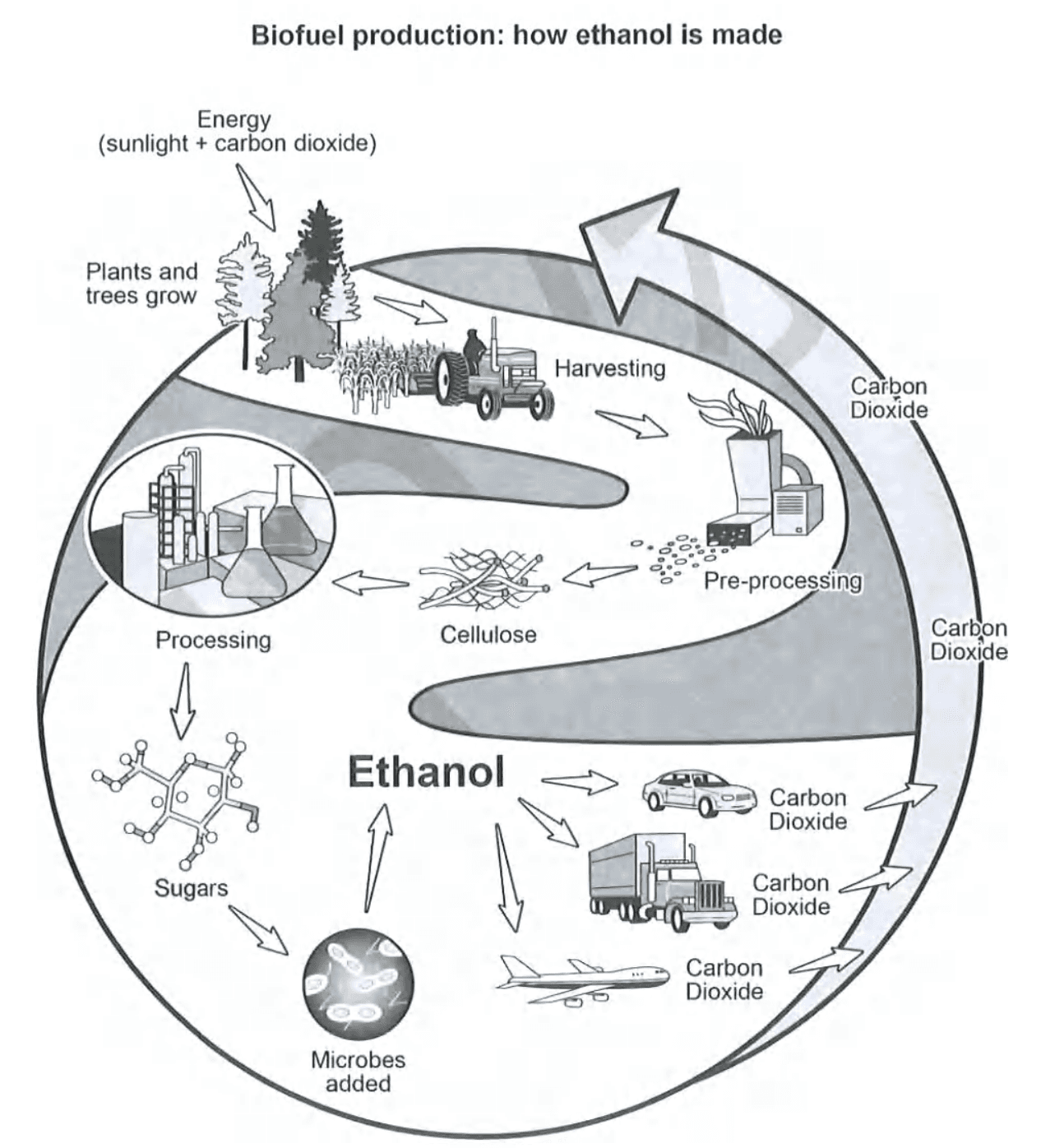
The diagram shows how ethanol, a biofuel, is produced from plants and how it is used. It is a cycle: plants grow using energy from sunlight and carbon dioxide, are harvested and processed into ethanol, and the carbon dioxide released when vehicles burn the fuel returns to help new plants grow.
The question
You should spend about 20 minutes on this task. The diagram below shows how a biofuel called ethanol is produced. Summarise the information by selecting and reporting the main features, and make comparisons where relevant. Write at least 150 words.
Free and timed, with a live word count, just like the computer-delivered test. Then get an instant AI band score.
The exam simulator runs on a computer. Open this page on a laptop or desktop to practise.
Key features to report
- The process is cyclical rather than linear: carbon dioxide released by vehicles using ethanol is shown flowing back to the start, where it helps plants and trees grow.
- The first stage is natural: plants and trees grow using energy from sunlight and carbon dioxide, and are then harvested with machinery such as a tractor.
- The harvested plant material is pre-processed, which produces cellulose; this cellulose then goes through processing in an industrial facility to produce sugars.
- Microbes are added to the sugars, and this produces ethanol, the final product of the manufacturing part of the process.
- Ethanol is used as fuel by three types of transport shown on the diagram: cars, lorries (trucks) and aeroplanes, each of which releases carbon dioxide.
- The diagram shows nine main stages from plant growth to the return of carbon dioxide, so a good answer covers each stage briefly in the correct order.
Model overview
Overall, ethanol production is a cyclical process that begins with the growth of plants and ends with the release of carbon dioxide, which is then reabsorbed by new plants. It involves both natural and man-made stages, from harvesting and processing plant material to adding microbes, before the fuel is used to power vehicles.
Paragraph plan
- 1
Introduction
Paraphrase the task: the diagram illustrates the stages by which the biofuel ethanol is made and used.
- 2
Overview
State that the process is a cycle, starting with plant growth and ending with carbon dioxide being released and reused, and that it combines natural stages with industrial processing.
- 3
Body paragraph 1: from growth to cellulose
Describe plants and trees growing with energy from sunlight and carbon dioxide, harvesting, and pre-processing, which produces cellulose.
- 4
Body paragraph 2: from cellulose to carbon dioxide
Describe processing the cellulose into sugars, adding microbes to produce ethanol, the use of ethanol by cars, lorries and aeroplanes, and the carbon dioxide they release returning to the start of the cycle.
Useful comparisons
- Divide the process into two halves: the agricultural stages (growth, harvesting) and the industrial stages (pre-processing, processing, adding microbes).
- Emphasise the cycle: the carbon dioxide emitted by vehicles returns to support plant growth, linking the end of the process to the beginning.
- Track how the material changes form: plants become cellulose, cellulose becomes sugars, and sugars become ethanol.
- Group the three users of ethanol, cars, lorries and planes, together in one sentence.
- Use passive forms throughout, because the focus is on what happens to the plant material, not who does it.
- Use a range of sequencers such as first, once, following this, at this point and finally, rather than repeating then.
Band 8+ model answer
193 words · An original model answer written for ieltswrites, not an official answer. It stays in English, as in the exam.
The diagram illustrates how ethanol, a type of biofuel, is produced from plants and then used.
Overall, ethanol production is a cyclical process which begins with the growth of plants and ends with the release of carbon dioxide, which is then reabsorbed by new plants. Between these two points, the plant material passes through several agricultural and industrial stages before the finished fuel is used to power vehicles.
The process starts with plants and trees, which grow using energy in the form of sunlight and carbon dioxide. These crops are harvested with farm machinery such as tractors. The harvested material goes through pre-processing, which turns it into cellulose, the fibre found in plant cells.
Following this, the cellulose undergoes further processing at an industrial plant, where it is converted into sugars. At this point, microbes are added to the sugars, and this yields ethanol, the final product. The ethanol is used as a fuel for various forms of transport, including cars, lorries and aeroplanes. Finally, the carbon dioxide emitted by these vehicles is released into the atmosphere and absorbed by new plants and trees as they grow, so the cycle can begin again.
Why this answer scores highly
- Task Achievement
- The answer covers every stage of the cycle accurately and in order, from plant growth to the return of carbon dioxide, and includes a clear overview of the cyclical nature and the mix of natural and industrial stages.
- Coherence and Cohesion
- The process is split into two logical halves, and a range of sequencers such as once, following this, at this point and finally make the order clear without repetition.
- Lexical Resource
- The answer uses process vocabulary such as harvested, converted into, yield, emit and reabsorbed, and paraphrases labels rather than copying them.
- Grammatical Range and Accuracy
- Present simple passive forms are used accurately throughout, combined with relative clauses, participle clauses and time clauses such as once the plants have been harvested.
Useful vocabulary
- biofuel
- a fuel made from plants or other living material
- cyclical process
- a process that ends where it began and repeats
- be harvested
- be cut and collected when ready
- pre-processing
- an early stage of treatment that prepares raw material for the main process
- cellulose
- the tough fibre found in the walls of plant cells
- be converted into
- be changed into a different form or substance
- microbes
- very small living organisms such as bacteria
- yield
- produce something as a result
- power
- provide the energy that makes a vehicle work
- emit
- send out a gas into the air
- be reabsorbed
- be taken in again
- the final product
- what is produced at the end of a process
- at this point
- a sequencer meaning at this stage of the process
Common mistakes
- Missing the cyclical nature of the process and stopping at the vehicles, without explaining that the carbon dioxide returns to help plants grow.
- Changing the order of the stages, for example putting sugars before cellulose or adding microbes before processing.
- Adding information that is not in the diagram, such as the temperature used, how long fermentation takes or claims that ethanol is environmentally friendly.
- Using active verbs with vague subjects such as people harvest the plants and they add microbes, instead of the passive voice.
- Writing no overview, or only saying that there are several stages without describing what the process begins and ends with.
- Copying labels word for word, such as Plants and trees grow, Microbes added, as separate fragments rather than in full sentences.
Frequently asked questions
- Which Cambridge book is this question from?
- This diagram showing how the biofuel ethanol is produced is Writing Task 1 of Test 3 in Cambridge IELTS 19 Academic, published in 2023.
- How many stages are there in the ethanol process?
- The diagram shows nine main stages: plant growth, harvesting, pre-processing, cellulose, processing, sugars, adding microbes, ethanol used by vehicles, and carbon dioxide returning to the plants.
- Should I use the passive voice in a process diagram?
- Yes, mostly. The passive, as in the plants are harvested and microbes are added, keeps the focus on the material, but active verbs are natural for natural stages such as plants grow.
- How many words should I write for this Task 1?
- Write at least 150 words; about 170-200 words is enough to describe every stage and give an overview in about 20 minutes.
Free and timed, with a live word count, just like the computer-delivered test. Then get an instant AI band score.
The exam simulator runs on a computer. Open this page on a laptop or desktop to practise.