劍橋雅思 13 Test 3 寫作 Task 1:各國發電量與用電量長條圖
劍橋雅思 13 · Test 3 · 學術類寫作 Task 1柱狀圖
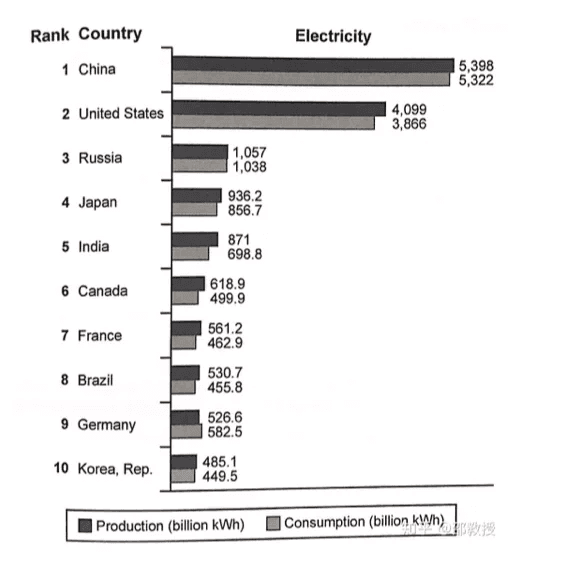
這張長條圖顯示 2014 年十大領先國家的發電量與用電量。數字以十億千瓦小時(kWh)為單位,國家依排名排列,從第一名的中國到第十名的南韓。
題目
You should spend about 20 minutes on this task. The bar chart below shows the top ten countries for the production and consumption of electricity in 2014. Summarise the information by selecting and reporting the main features and make comparison where relevant. Write at least 150 words.
免費計時練習,即時顯示字數,與機考完全一樣。寫完即可獲得 AI 即時評分。
考試模擬器需在電腦上使用。請以筆電或桌機開啟本頁進行練習。
需要寫出的關鍵特徵
- 中國和美國遠遠領先其他所有國家:中國發電 5,398、用電 5,322 billion kWh,美國發電 4,099、用電 3,866 billion kWh。
- 俄羅斯以發電 1,057、用電 1,038 billion kWh 遠居第三,只有中國數字的約五分之一;它是唯一另一個超過 1,000 billion kWh 的國家。
- 接下來是日本(發電 936.2、用電 856.7)和印度(發電 871、用電 698.8),印度的發電量與用電量相差超過 170 billion kWh,差距很大。
- 其餘五國的數字緊密集中在約 450 到 620 billion kWh 之間:加拿大 618.9 和 499.9,法國 561.2 和 462.9,巴西 530.7 和 455.8,德國 526.6 和 582.5,南韓 485.1 和 449.5。
- 德國是唯一用電量大於發電量的國家(用電 582.5 對發電 526.6 billion kWh);其他國家的發電量都超過用電量。
- 這張圖只有單一年份(2014 年),所以沒有隨時間變化的趨勢;作答時必須比較各國,以及發電量與用電量之間的差額。
概述範例
整體而言,2014 年中國和美國無論在發電還是用電方面,都遠遠領先,其他八個國家則遠遠落後。幾乎每個國家的發電量都超過用電量,只有德國是例外。
段落規劃
- 1
引言
改寫題目:這張圖比較 2014 年十大領先國家的發電量與用電量,以十億 kWh 計。
- 2
概述
不帶數字地說出兩個概括的重點:中國和美國在發電和用電方面都居於主導地位,而且幾乎每個國家的發電量都超過用電量,只有德國是例外。
- 3
第一段主體:前五名
給出中國(5,398 和 5,322)與美國(4,099 和 3,866)的數字,再說明大幅下降至俄羅斯(1,057 和 1,038)、日本(936.2 和 856.7)與印度(871 和 698.8),並指出印度有很大的盈餘。
- 4
第二段主體:後五名與德國
說明加拿大、法國、巴西、德國和南韓的發電量大致在 485-620 billion kWh 之間,用電量約為 450-580 billion kWh。以加拿大的 618.9 和南韓的 485.1 作為範圍,然後突顯德國:用電 582.5,發電卻只有 526.6。
可用的比較點
- 把中國和美國歸為兩大巨頭,它們的發電量合計遠大於其他八國的總和。
- 比較中國和俄羅斯:俄羅斯的發電量只有中國的約五分之一。
- 把第六到第十名的國家歸為一組,因為它們的數字非常接近。
- 對比發電量遠超過用電量的國家,如美國(約 233 billion kWh)和印度(約 172 billion kWh),與兩者幾乎相等的國家,如俄羅斯和中國。
- 把德國單獨挑出來,它是唯一出現缺口的國家,用電量比發電量多出約 56 billion kWh。
- 注意德國的發電量排第九,但用電量則會排第六。
8 分以上範文
207 字 · 本範文為 ieltswrites 原創,並非官方解答。與考試相同,範文維持英文。
The bar chart compares the amount of electricity generated and used by the ten leading countries in 2014, measured in billion kilowatt hours (kWh).
Overall, China and the United States were by far the largest producers and consumers of electricity, with the remaining eight countries trailing a long way behind. In addition, almost every country produced more electricity than it consumed, Germany being the sole exception.
China topped the ranking, generating 5,398 billion kWh and using 5,322 billion kWh. The United States came second, with production and consumption of 4,099 and 3,866 billion kWh respectively. Russia was a distant third, producing just over 1,000 billion kWh and using a similar amount, which was only about a fifth of China's figures. Japan and India followed, producing 936.2 and 871 billion kWh, although India consumed considerably less than it generated, at 698.8 billion kWh.
The figures for the bottom five countries were tightly grouped. Their output ranged from 618.9 billion kWh in Canada to 485.1 billion kWh in the Republic of Korea, and their consumption was mostly between about 450 and 500 billion kWh. Germany, however, was the only nation to use more electricity than it produced, consuming 582.5 billion kWh compared with an output of 526.6 billion kWh.
這篇為什麼能拿高分
- 任務達成 (Task Achievement)
- 概述指出中國和美國的主導地位,以及發電量普遍高於用電量;主體則挑選領先國家、中間組和德國這個例外的準確數字,而不是羅列每一個數值。
- 連貫與銜接 (Coherence and Cohesion)
- 各國依規模分組,先是前五名,再是後五名,而 respectively、by contrast 和 the sole exception 等銜接用語,清楚地連結了各項比較。
- 詞彙運用 (Lexical Resource)
- 發電與用電以 generated、output、used 和 surplus 改寫,a distant third 和 trailed well behind 等比較用語則增添了精準度。
- 語法範圍與準確度 (Grammatical Range and Accuracy)
- 這篇作文使用比較級和最高級、respectively 句型、generating 5,398 billion kWh 這類分詞子句,以及用 however 標示德國例外的對比句,過去式動詞全都準確。
實用字彙
- billion kilowatt hours
- 圖中使用的電能單位,寫成 billion kWh(十億千瓦小時)
- generate electricity
- 產生電力,是 production 的同義說法(發電)
- electricity consumption
- 電力的使用量(用電量)
- output
- 生產的量(產量)
- surplus
- 生產量大於使用量的部分(盈餘)
- shortfall
- 生產量小於使用量的部分(缺口)
- by far the largest
- 遠比其他所有的都大
- a distant third
- 居第三位,但與前兩名相距甚遠
- trail behind
- 處於遠低於其他的水準(落後)
- tightly grouped
- 數字彼此非常接近(緊密聚集)
- the sole exception
- 唯一不符合整體模式的例子
- exceed
- 大於(超過)
- roughly a fifth of
- 另一個數字的約 20%
- respectively
- 分別,依照剛提到的項目順序
常見錯誤
- 描述增加和減少,例如 electricity production rose from China to Korea;這張圖只有單一年份,沒有隨時間的趨勢。
- 一個國家一個國家地列出全部二十個數字,沒有餘地做比較,也使答案太長。
- 漏掉德國,它是唯一用電量高於發電量的國家,也是圖中最重要的例外。
- 漏掉單位,或把 billion kWh 寫成 kWh,這會讓每一個數字都報錯。
- 使用未來式或現在式;2014 年已經過去,所以必須使用過去簡單式。
- 沒有寫出說明中國和美國在兩項指標上都居於主導地位的概述。
常見問題
- 這道題出自劍橋雅思第幾冊?
- 這張 2014 年前十大國家發電量與用電量的長條圖,是 2018 年出版的《劍橋雅思 13 學術類》Test 3 的寫作 Task 1。
- 需要提到十個國家嗎?
- 應該涵蓋全部國家,但不必逐一詳述。對領先的國家和德國給出確切的數字,並用一個範圍概括緊密集中的後五名。
- 這張圖該用哪種時態?
- 用過去簡單式,因為數據指的是 2014 年。圖中沒有隨時間的變化,所以重點放在比較,而不是趨勢動詞。
- 這道 Task 1 要寫多少字?
- 至少要寫 150 字;大約 170 到 200 字,就足以在約 20 分鐘內涵蓋概述和主要比較。
免費計時練習,即時顯示字數,與機考完全一樣。寫完即可獲得 AI 即時評分。
考試模擬器需在電腦上使用。請以筆電或桌機開啟本頁進行練習。